


Varicose veins are enlargements of the superficial veins of the lower extremities, accompanied by valvular insufficiency and circulatory disorders.The term “varicose veins” comes from Latin.Varix – “swelling”.This diagnosis is very common: up to 89% of women and up to 66% of men in developed countries have signs of varicose veins of varying degrees.
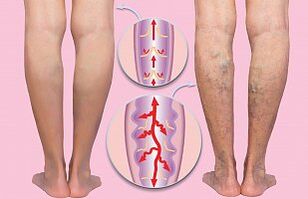
The valves that are exposed to the highest mechanical stress are usually the first to be affected.In this case, there is a pathological leakage of blood through the mouth of the large and small saphenous veins, sometimes also through large perforating veins.An excessive blood volume arising in the superficial veins gradually leads to overstretching of the vein wall.The total blood volume in the superficial venous bed of the lower extremities increases, resulting in dilatation and valve insufficiency of the perforating veins.Varicose veins most commonly affect the veins of the lower extremities, but can occur in any organ or part of the body.
Symptoms of varicose veins
The clinic of varicose veins is determined by the stages of the disease:
- Stage 1. The first symptoms are heaviness and fatigue in the legs after a day's work and swelling of the ankles, feet and lower legs in the late afternoon.In this case, all symptoms disappear after a night's rest or after active walking.
- Stage 2: Spider veins on the legs, pain along the veins and rare nighttime leg cramps.
- Stage 3. In this stage, small veins and nodules can already be felt on the skin, which appear after sitting or standing for a long time.
- Stage 4. In addition to all of the above symptoms, there is constant swelling in the late afternoon, which may not completely disappear in the morning.
- Stage 5. The skin on your legs may become dark in color.Skin atrophy occurs.
- Stage 6. Trophic ulcers appear, capable of healing.
- Stage 7. Trophic ulcers do not heal.
One of the first signs of the onset of the disease is often swelling and pain along the veins.Varicose veins in the legs cause slight swelling of the soft tissues, usually in the feet, ankles and lower legs.The presence of such “heavy legs syndrome” does not necessarily predispose to subsequent varicose vein transformation.However, most patients noticed one of the listed symptoms at the beginning of the disease, especially in the evening, when standing or walking for a long time in hot weather.
The disease develops over a long period of time and the listed symptoms are accompanied by “evening” swelling.The swelling initially appears in the ankles and feet and then spreads to the lower leg.If such edema occurs, one should speak of developed chronic venous insufficiency.The skin color takes on a bluish hue.If patients at this stage do not receive the necessary treatment, a certain proportion of them develop hyperpigmentation of the leg skin and lipodermatosclerosis.In more advanced cases, trophic ulcers occur.
In addition to varicose veins of the lower extremities, there are also:
- varicose veins of the pelvis in women;
- varicocele in men;
- Damage to the veins of the lower extremities;
- Enlargement of the esophageal veins due to liver disease;
- postthrombophlebitic manifestations in various organs.
Causes of the disease
Factors contributing to the development of the disease:
- Sedentary work or work “on your feet”;
- obesity;
- heredity, predisposition to disease;
- Age and gender.The greatest likelihood of developing varicose veins is in women aged 30 to 40;
- Pregnancy.
The cause-and-effect relationships of the occurrence of varicose veins are still a matter of debate and scientific research.Disturbances in the outflow of venous blood are usually caused by the absence or weakness of the vascular valve apparatus located deep in the tissue.Varicose veins of the lower extremities and other organs can also be caused by a decrease in the tone of the vascular wall.
Less commonly, varicose veins in the legs are associated with the following diseases:
- previous inflammation of the veins (phlebitis);
- Formation of blood clots in the venous bed;
- congenital anomalies of vascular development.
Treatment of varicose veins of the lower extremities
The essence of conservative treatment of varicose veins is to restore normal venous drainage.
Physical activity
For patients with varicose veins, walking is recommended for both prevention and treatment.Contraction of the leg muscles pumps blood to the heart and improves blood circulation.
Wearing compression clothing
The use of compression stockings is one of the conservative methods of treating varicose veins and other venous lesions.The products have a compressive effect to maintain vascular tone and restore blood circulation to the affected area of the lower extremities.It is important to change underwear regularly as they tend to stretch.
Medication
Medicines for the treatment of varicose veins are designed to increase the tone of the veins, reduce capillary permeability and improve lymphatic drainage and microcirculation, as well as eliminate rheological disorders and stop inflammation.Drugs used to treat varicose veins are divided into several groups.Phlebotonics: diosmin, tribenoside, rutoside and others;Anticoagulants: enoxaparin sodium, nadroparin calcium;Anti-edema agents: diosmin and others;Disaggregators: ticlopidine, acetylsalicylic acid, calcium dobesylate;for trophic changes: tribenoside, diosmin;Antioxidants: Vitamin E;Acetylsalicylic acid and its derivatives;nonsteroidal analgesics;Fibrinolytics.
Doctors also recommend using topical medications – ointments and gels.This helps to relieve pain in the limbs and reduce swelling, improve the functioning of the valve system, increase the tone of the vascular walls and restore normal blood flow.
Surgical treatment of varicose veins
In some cases, surgery is indicated - this is the most effective treatment method.Modern operations performed using laser, radiofrequency or sclerotherapy are performed under local anesthesia.
Prevention.
A truly effective prevention of varicose veins is the use of compression socks, maintaining a normal weight and regular exercise, especially walking or swimming.Self-massage also helps with the manifestations of varicose veins (you can also use creams or ointments for this).